Liquid roof waterproofing creates a protective layer across a roof, helping keep water out and protect the structure below. You apply a liquid coating to form a continuous membrane that follows the roof’s shape and covers joints and details.
Choosing a suitable system depends on your roof’s condition, material and exposure. Products such as Terraco Flexicoat Waterproof Acrylic Roof Coating, S4Proof AC 50 and S4Proof BT 40 offer different coating options, while correct preparation and ongoing checks help support lasting performance.
How Seamless Membranes Protect Roofs
Liquid-applied membranes form a continuous coating across the roof, including around upstands, outlets and penetrations. Their performance depends on choosing a compatible system, preparing the substrate and applying the coating at the specified coverage.
Water Resistance and Crack Bridging
Once cured, a liquid membrane creates a water-resistant layer with no sheet joints for water to pass through. You apply it over the prepared roof surface and detail changes in plane, edges and penetrations according to the product instructions.
Some formulations remain flexible and can accommodate limited movement or small cracks in the substrate. This ability is known as crack bridging, and it depends on the membrane’s properties, the crack’s size and movement, and the installation system. It does not replace repairs to loose, unstable or structurally damaged areas.
For example, S4Proof AC 50 elastomeric resin based liquid waterproofing material and S4Proof BT 40 modified bitumen-rubber based liquid waterproofing material are liquid waterproofing options. The S4Proof BT 40 page describes it as a modified bitumen-rubber based, waterborne, single-component liquid waterproofing material with crack bridging features that forms a seamless, jointless waterproof layer, and the S4Proof AC 50 page says it bridges capillary cracks.
Suitable Roof Types and Substrates
Liquid membranes suit many roof shapes because you can apply them around details that are difficult to cover neatly with sheet materials. The Terraco Flexicoat Waterproof Acrylic Roof Coating page describes it as designed for application on roofs constructed from a wide variety of materials, including concrete, light weight concrete, roof tiles, wood, galvanised steel and asphalt, and the S4Proof AC 50 page lists flat roofs, terraces, balconies, parapet edges, gutters and chimneys among its application areas.
Before coating, check that the roof is stable, clean and free from loose material, standing water, grease and contaminants. Repair defects and confirm that existing coatings or coverings will bond with the chosen system. A primer may be required on particular surfaces. S4Prime BP 40 bitumen based waterproofing primer is a named option for suitable bituminous applications, subject to its product guidance.
Products differ in substrate and intended use. Terraco Flexicoat Waterproof Acrylic Roof Coating is a one-pack roof coating applied by brush or spray, while Terraco Weathercoat GP 20kg Kit is a two-component cement-acrylic coating for flat roofs, balconies and patio terraces that its page says is not for use over bitumen coatings.
Benefits and Performance Limitations
A seamless coating reduces the number of joints that need detailing, and its liquid form helps you cover awkward shapes and roof features. It can also simplify localised repairs when the existing membrane and repair product are compatible.
The finished roof depends on preparation, coverage and application quality. Thin areas, missed details or poor adhesion can create weak points, while trapped moisture or movement beyond the membrane’s capacity can affect performance. Follow the manufacturer’s instructions for substrate preparation, reinforcement, coat application and inspection.
Plan access and weather conditions before work begins, and protect the coated area as specified. Check outlets and vulnerable details during routine roof inspections, and address damage promptly using a compatible repair system.
Choosing the Right Coating System
Choose a coating by matching its chemistry to the roof’s exposure, substrate and drainage. Check the product specification and prepare the surface as directed before application.
Acrylic, Elastomeric Resin, Bitumen-Rubber and Cement-Acrylic Options
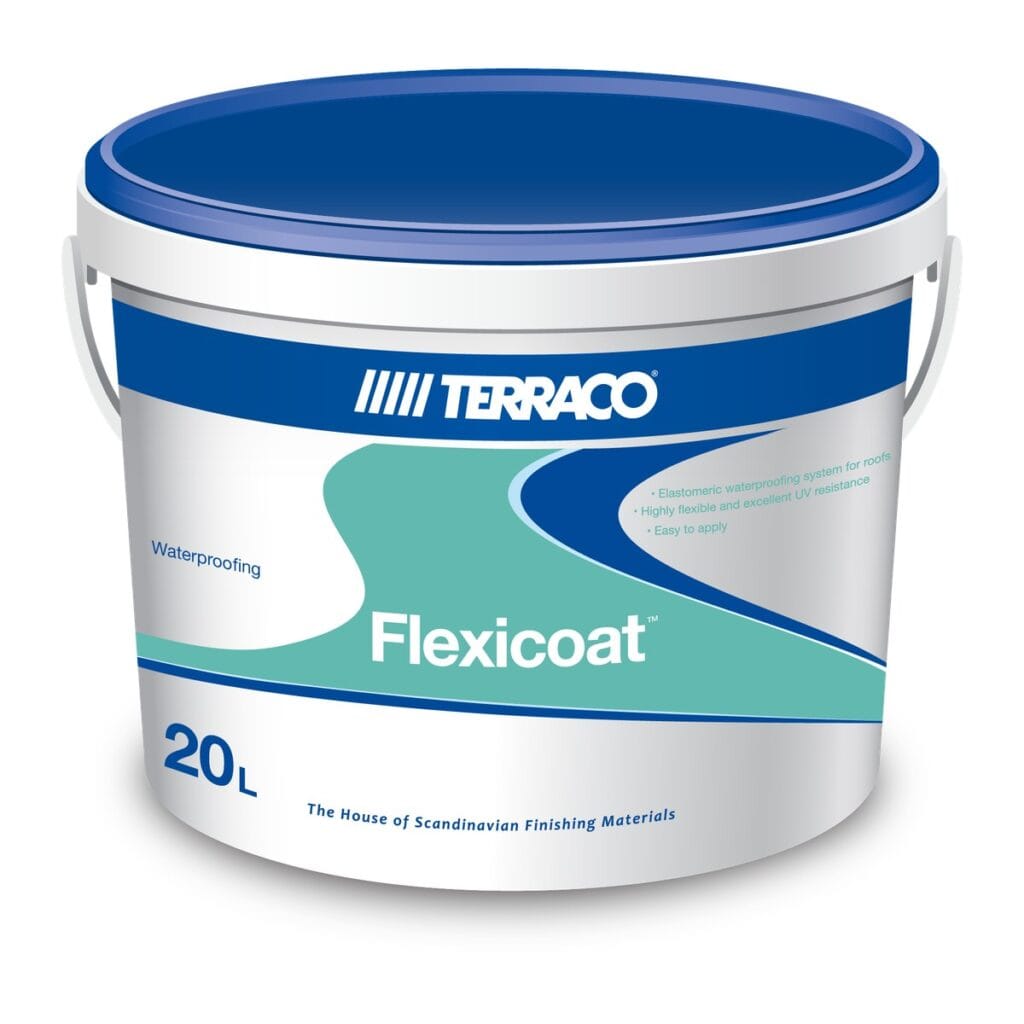
Terraco Flexicoat Waterproof Acrylic Roof Coating is described on its page as a blend of weather resistant pigments, fillers and acrylic resins that gives a waterproof and weatherproof, seamless coating, allows the surface to breathe, reflects ultra-violet rays and after drying can be walked upon uncovered. Terraco Weathercoat GP 20kg Kit is a two-component cement-acrylic coating; its page says tile adhesives and mortars bond directly to it, so it is the option for a roof or terrace that will be tiled over.
S4Proof AC 50 elastomeric resin based liquid waterproofing material is described on its page as ready-to-use and UV-resistant, for flat roofs, terraces and balconies, resistant to light pedestrian traffic, permeable to water vapour and able to be painted with water-based paints; the page also says it is not suitable for application against negative directional water pressure. S4Proof BT 40 modified bitumen-rubber based liquid waterproofing material is a waterborne, single-component coating that its page lists for foundations, retaining walls, terraces and balconies and as an under coating in terrace waterproofing, and it can be applied on dry and damp surfaces. The choice therefore turns on where the coating goes, whether the roof is walked on, whether the finish is left exposed, painted or tiled over, and whether the surface is damp at application. Compare the technical data sheets for substrate suitability, reinforcement requirements and exposure limits.
Climate, Ponding Water, and UV Exposure
Assess how rainwater leaves the roof. Identify low spots where water remains after rainfall, blocked outlets and areas with poor falls. Check each product’s data sheet for its suitability in areas exposed to standing water, as coating performance depends on the specific formulation and system.
Sun exposure also matters. Roof sections with prolonged direct sunlight need a coating rated for the expected UV exposure; confirm this in the manufacturer’s documentation. In the UK, consider how wind-driven rain and seasonal weather affect the roof, and plan application around the product’s stated conditions. Follow the current instructions for the chosen system, including requirements for coats, reinforcement and protection during application.
Material Compatibility
Identify the existing roof material and any previous coating before choosing a product. Check whether the system is approved for that substrate, and follow its preparation instructions.
Application and Long-Term Care
A durable liquid roof membrane depends on sound, clean surfaces, even application and suitable curing conditions. Follow the selected product’s instructions, then inspect the coating regularly so you can address damage before water reaches the roof structure.
Surface Preparation and Repairs
Start by checking the roof for loose coatings, blisters, cracks, ponding water and areas where the substrate has deteriorated. Remove dirt, moss, grease and loose material, then let the surface dry as required by the product instructions. The coating needs a stable surface to bond to.
Repair defects and secure loose edges before application. Pay particular attention to roof outlets, upstands, laps and penetrations, where water can collect or enter. Do not coat over standing water or debris. If the roof has a persistent drainage problem, address it before waterproofing; a liquid membrane will not correct the underlying fall.
Confirm that the chosen coating suits the roof substrate and existing finish. Products such as Terraco Flexicoat Waterproof Acrylic Roof Coating, S4Proof AC 50 elastomeric resin based liquid waterproofing material and S4Proof BT 40 modified bitumen-rubber based liquid waterproofing material have different formulations, described above. The S4Proof AC 50 and S4Proof BT 40 pages both say the surface must be clean, dry and free from dust, grease and oil, and the Terraco Weathercoat GP page says to remove laitance, loose material, oil and grease and to repair cracks and defects before coating.
Priming, Reinforcement, and Membrane Thickness
Apply primer where the product instructions call for it, using the specified primer for the substrate. S4Prime BP 40 bitumen based waterproofing primer is described on its page as a bitumen emulsion-based primer used before bitumen-based liquid or membrane-type waterproofing materials, ready to use and not requiring heating or thinning. Allow the primer to dry as directed before applying the membrane, and avoid contaminating the prepared surface.
Treat vulnerable details carefully. Reinforcement may be required at joints, corners, outlets and other changes in direction. Embed it into the wet coating and remove creases or trapped air, following the system instructions. This helps create continuous coverage across areas that face greater movement or water exposure. The Terraco Flexicoat page describes embedding glass fibre scrim in areas which require reinforcement, and the S4Proof AC 50 page a sealing mesh between coats on walkable roofs.
Apply the coating at the stated coverage rate and build up the specified membrane thickness. A thin, uneven layer can leave weak spots, while excessive material can affect drying and performance. Keep a record of the area coated and the product used, especially if you plan to maintain the roof with the same system.
Curing Conditions and Quality Checks
Check the product instructions for suitable weather and curing conditions before you start. Rain, condensation, low temperatures or a damp substrate can affect application and drying. Protect freshly coated areas from foot traffic and water until the manufacturer’s stated curing requirements have been met. The Terraco Flexicoat page says not to apply if rain is threatening, as the coating is not resistant to rain until fully dry, and the S4Proof AC 50 page says not to apply in rainy or windy weather and to protect the surface from rain, dew, snow or hail until completely dry.
Work across manageable sections so you can maintain a wet edge and inspect coverage as you go. Check for pinholes, bare patches, bubbles, wrinkles and exposed reinforcement. Correct defects using the method specified for the product, and make sure the coating reaches corners, edges and roof details without gaps.
Once the membrane has cured as directed, inspect the full roof in good light. Confirm that the surface looks continuous and that outlets remain clear. Keep the product packaging and application notes for reference, including the batch details and any repairs made during the work.
In Short
A liquid roof waterproofing coating is a brush-on or spray-on layer for a sound roof, terrace or balcony that needs a seamless, weather-resistant finish. Choose between an acrylic roof coating, an elastomeric resin coating, a bitumen-rubber coating and a cement-acrylic coating by where the coating goes, whether it is walked on, painted or tiled over, and whether the surface is damp. Prepare the roof, prime where the data sheet says so, apply more than one coat with reinforcement at the details, and keep rain off until the coating is dry. See the waterproofing materials range at Sealants4All.