Fire rated expanding foam fills gaps around service penetrations and building joints where fire resistance matters. The product’s tested rating and the way you install it both decide whether it suits your project. This guide explains what sets a fire rated foam apart from a standard gap-filling foam, where it is used, how the three fire rated foams at Sealants4All differ, and how to apply one.
What Makes an Expanding Foam Fire Rated
A standard expanding foam is made for filling, sealing and insulating gaps. Soudal Genius Gun Gap Filling Expanding Foam 123895 – 500ml, for example, is described on its product page as a polyurethane expanding foam for filling, sealing and insulating gaps in construction, renovation and maintenance work, including static and low-movement construction joints. Its page makes no fire-protection claim, and it is not sold in the fire rated foams category.
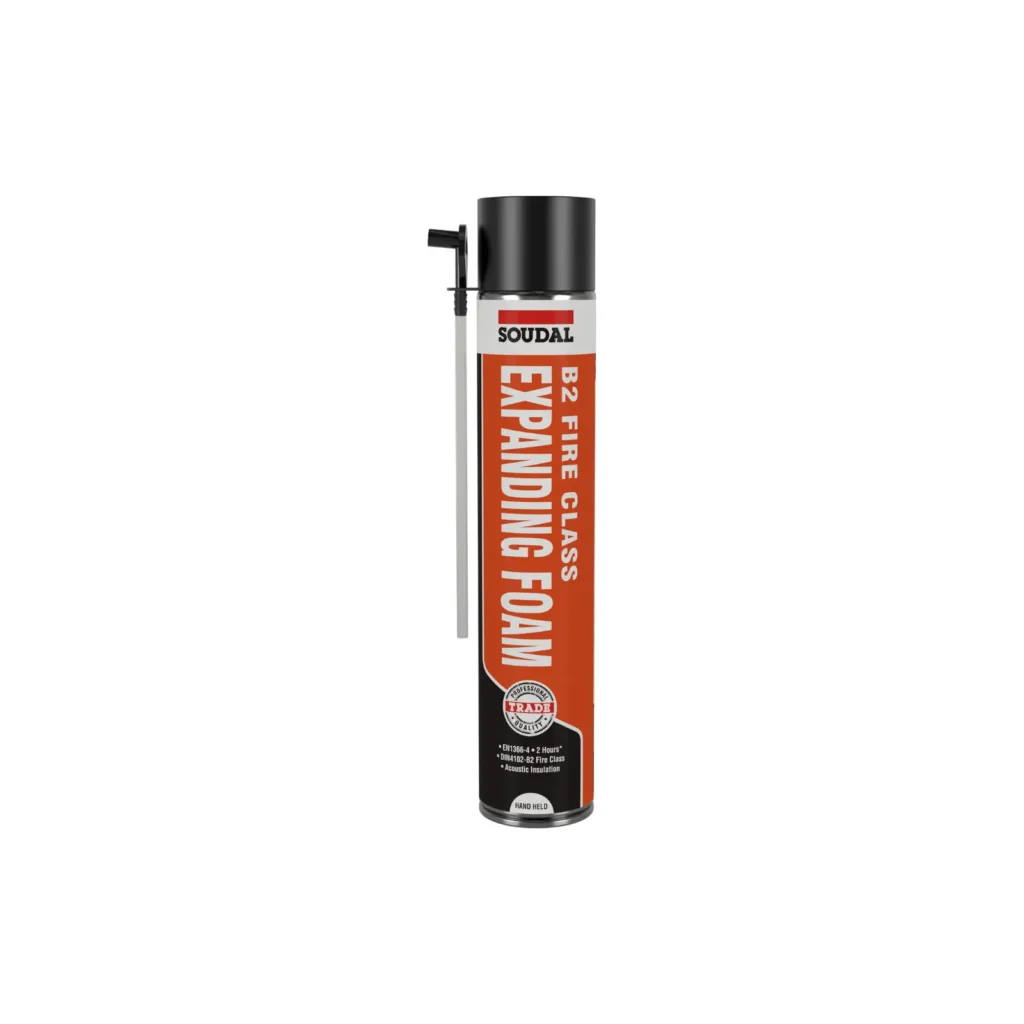
A fire rated foam is a different product. Soudal 128449 B2 Fire&Acoustic Expanding Foam – 750ml is described on its page as a fire rated polyurethane foam filler for use in passive fire protection systems as a large gap filler. fischer FireStop Hand Foam – 42757 – 12 Pack is a single component, self expanding polyurethane foam that cures by absorbing moisture from the atmosphere and gives an effective seal against smoke. Sika Boom 420 Fire 750ml is a 1-part, fire resistant, self-expanding polyurethane foam.
Why the Rating Belongs to the Tested Joint, Not the Can
A fire resistance rating is the result of a test on a specific joint or opening: a given gap width, wall or floor type, backing material and foam depth. The Soudal B2 page gives its fire resistance as “depending on joint configuration”, and the same applies to every fire rated foam. A foam product’s rating does not automatically transfer to every wall, floor or gap where you use it. The period, class, test standard and approval of each product are in its data sheet and classification report, which this guide does not reproduce: read those documents and match the tested configuration to the gap in front of you. A product name on its own does not tell you the rating or the permitted use.
Where Fire Rated Expanding Foam Is Used, and Where It Is Not
The product pages name these uses. Soudal 128449 B2 Fire&Acoustic Expanding Foam – 750ml: large gaps in passive fire protection systems, installation of fire retardant window and door frames, sealing of expansion and connection joints, penetration seals, and thermal and acoustic insulation around doors and window frames, pipe penetrations, insulation and roofing materials. Sika Boom 420 Fire 750ml: joints in fire compartment walls. fischer FireStop Hand Foam – 42757 – 12 Pack: construction joints in walls and floors, and insulating and sealing doors and windows, with concrete, masonry, steel and timber named as backing material.
In every case, keep the foam within the joint or penetration that the tested configuration describes, and finish it as the system details require. Record the product and the location of the work if your project keeps fire-stopping documentation.
Openings That Need a Wrap, Collar or Sealant Instead
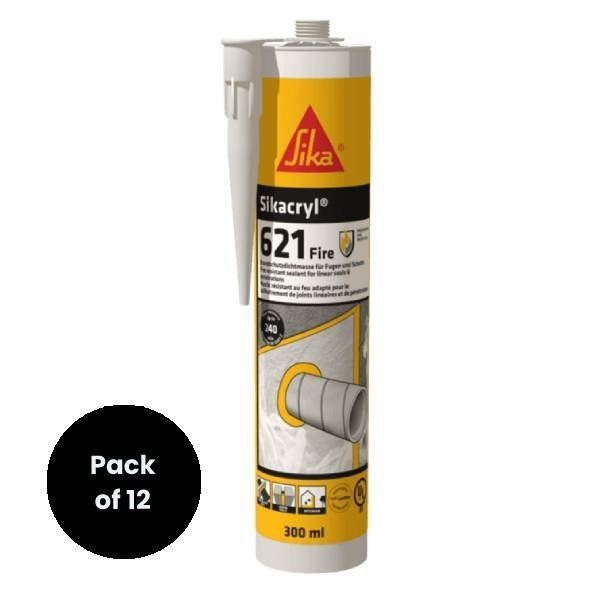
A combustible pipe passing through a fire compartment wall or floor needs an intumescent pipe wrap or a fire collar rather than foam: see the intumescent pipe wraps vs fire collars guide. Small linear joints and movement joints are sealed with a fire resistant sealant: see the passive fire protection sealant guide. Where the gap, service or substrate falls outside the foam’s tested configuration, use the system the specification names, and ask the project designer or the manufacturer if you cannot match the opening to the tested details. The passive fire protection products category holds the sealants, putty, wraps and collars that go with the foams.
Choosing Between the Fire Rated Foams on the Site
The three fire rated foams at Sealants4All differ in how they are applied and in what their pages say about the cured foam.
- Sika Boom 420 Fire 750ml: its combi-valve allows application by either gun or nozzle, so it can be used with a straw or an application gun. The page names joints in fire compartment walls as its use.
- fischer FireStop Hand Foam – 42757 – 12 Pack: a hand foam supplied as a 12 pack of aerosol cans. Its page says the foam cures to a semi-rigid structure which accommodates low movement and vibration, adheres to most building materials, and can be rendered, cut, painted or sanded once cured.
- Soudal 128449 B2 Fire&Acoustic Expanding Foam – 750ml: an aerosol can for use in passive fire protection systems as a large gap filler, with a thermal and acoustic insulation function around doors, window frames and pipe penetrations named on its page.
To choose, start from the opening: its size, the wall or floor type and the backing material. Then read each product’s data sheet and classification report and pick the foam whose tested configuration covers that opening. Application method comes second: choose between gun, nozzle and hand foam according to how many openings you have and the equipment on site. The product pages give no gap width limit that this guide can repeat, so take that figure from the data sheet too. Browse the fire rated foams category for the current range.
Applying Fire Rated Expanding Foam
The steps below follow the instructions on the Soudal 128449 B2 Fire&Acoustic Expanding Foam – 750ml product page. Read the instructions of the foam you are using, because they take precedence.
- Shake the can well before use, and again at intervals during application.
- Make sure the surface is free from grease and dust. Remove loose debris and check that the opening is stable and within the limits in the data sheet.
- Moisten the surfaces with a water sprayer before application. When you work in layers, moisten again after each layer.
- On a non-conventional substrate, make a preliminary adhesion test first.
- Fill only part of the hole or cavity, because the foam expands as it cures.
- Remove fresh foam at once with Soudal SoudaFoam Gun&Foam Cleaner 130576, which its page describes as a cleaning aerosol for the removal of uncured polyurethane foam from application guns, tools and surrounding surfaces. Cured foam can only be removed mechanically or with a PU remover: see how to remove expanding foam.
Finishing and Records
Once cured, trim the foam flush with the surface. The fischer FireStop Hand Foam page says its cured foam can be rendered, cut, painted or sanded; check the page of the foam you used before finishing it. Inspect the full perimeter of the opening for gaps, missed sections or foam that has pulled away from the substrate, and correct any defect as the product guidance describes before the opening is covered by trims or boards. Keep the data sheet and classification report of the foam with the fire-stopping record for the job, together with the product used and the location of the work.
See the fire rated foams at Sealants4All.