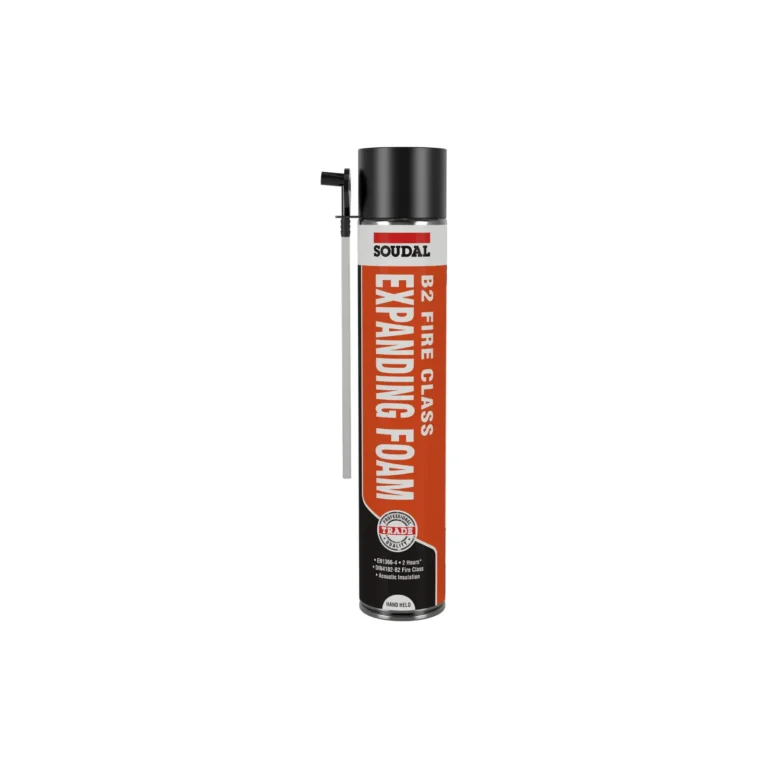
Expanding foam can seal gaps quickly, but stray blobs on frames, floors or tools need careful handling. For wet foam, use a suitable cleaner; for cured foam, let it harden and remove it carefully with a scraper or knife. Check the product label before using any cleaner.
Your approach depends on whether the foam is still wet and what it has stuck to. Learn how to protect nearby surfaces, clean fresh spills and tackle hardened foam, with suitable products such as Soudal PU Remover and Soudal Swipex Heavy Duty wipes.
Assess the Foam and Protect the Surface
Identify whether the foam is still wet or has cured, then match your removal method to the surface. Solvents can mark or damage some finishes, so the testing steps below come before any cleaner touches the surface.
Check Whether the Foam Is Wet or Cured
Touch the foam lightly with a gloved hand. Wet foam feels sticky and can transfer to your glove; cured foam feels firm and dry. Avoid spreading wet foam by wiping it across the surface. The distinction matters because, as the Soudal PU Remover page notes, foam that has fully cured can be difficult to remove with conventional cleaning products.
For fresh residue on a non-porous surface, Soudal Swipex Heavy Duty wipes are a practical option. For foam around a gun or nozzle, use Soudal SoudaFoam Gun&Foam Cleaner as directed on its label.
Cured foam needs a different approach, covered under “Tackle Cured Foam” below: trim the excess, then deal with any residue using a remover made for cured foam.
Test Cleaners on an Inconspicuous Area
Before applying a cleaner, check its label for suitable materials and safety instructions. Choose a hidden area made from the same material and finish as the visible surface. Apply a small amount with a cloth or applicator, then check for changes such as softening, discolouration, dulling or swelling.
Let the test area dry before deciding whether the cleaner is suitable. Keep the product within the test spot and use only the amount needed. If the finish changes, stop and use a method appropriate to that material, such as careful mechanical removal where safe.
Wear gloves and ventilate the work area when using foam cleaners.
Clean Up Wet Foam
Act quickly while the foam is still wet, and keep it from transferring to nearby surfaces. Choose a cleaner that suits the surface, and follow its label directions.
Lift Off Excess Foam Without Spreading It
Put on gloves and lift away the bulk of the wet foam with a piece of card or a disposable tool. Work from the outside of the spill towards the centre, using a fresh edge as foam collects. Avoid wiping or pressing down, which can spread the foam and push it into joints or fabric.
For foam on your skin, wipe it off carefully with a dry cloth before it cures, then wash the area with soap and water. Don’t use solvent on your skin. Keep foam away from eyes and follow the product label’s safety advice.
Use a Suitable Solvent on Compatible Surfaces
Check the foam and cleaner labels before applying anything. For wet foam, reach for a cleaner made for uncured foam rather than a remover: Soudal PU Remover (Soudal PUFR PU Expanding Foam Remover) is designed for cured PU foam residues on non-porous surfaces, so keep it for the cured-foam stage below.
Soudal SoudaFoam Gun&Foam Cleaner is a cleaning aerosol designed to remove uncured PU foam from application guns, tools and surrounding surfaces. Soudal Swipex Heavy Duty wipes are double-action wipes for removing uncured PU foam from hands, tools and surfaces, though their product page notes they are not for use on porous surfaces. Follow each product’s instructions, ventilate the area, and keep cleaners away from ignition sources where the label advises.
Tackle Cured Foam
Once expanding foam has cured, cut and scrape it away in controlled layers, taking care not to gouge the surface beneath. Use extra caution on skin, fabric and delicate finishes, where solvents or abrasive tools can cause damage.
Trim and Scrape Away the Bulk
Wear gloves and eye protection, then use a sharp utility knife to slice off protruding foam close to the surface. Keep the blade angled away from the material beneath, and work in small sections. On a hard surface, lift the remaining foam with a plastic scraper; use a metal scraper only where the substrate can withstand it.
For stubborn residue, check the product label before applying a remover. Soudal PU Remover (Soudal PUFR PU Expanding Foam Remover) is intended for cured foam, so follow the label instructions. Avoid scraping across painted, coated or plastic finishes until you know they can tolerate the tool and remover.
The remover is a ready-to-use gel, and its product page says the gel consistency lets it stay in contact with the foam for longer, with no mixing or preparation needed. The same page says it is for smooth, non-absorbent surfaces, so do not use it on porous materials.
Treat Residue on Skin, Fabric, and Delicate Finishes
Do not pull cured foam from skin with a blade or use solvent on your body. Carefully trim raised foam without cutting the skin, then let the remaining material wear away as the skin sheds. Seek medical advice if foam affects your eyes or causes a reaction.
On fabric, allow the foam to cure, then gently pick or trim off what you can. Removers can stain or damage fibres, so check the care label and test a hidden area before use.
For delicate finishes, use a soft cloth or plastic scraper. Soudal Swipex Heavy Duty wipes suit uncured residue, and Soudal SoudaFoam Gun&Foam Cleaner is for uncured foam and for cleaning foam guns, so do not rely on either for cured residue.
Avoid the Clean-Up Next Time
Foam that lands where it should is foam you never have to remove. Cured foam can be difficult to remove with conventional cleaning products, so deal with spills while the foam is still wet, and keep a cleaner to hand.
For single-component gun foam, the fischer metal foam gun PUP M3 is described on its product page as a metal foam gun for 1K gun foam, with infinitely variable control of the foam expulsion for controlled filling and insulating. Its page also says opened cans can stay screwed onto the gun during interruptions of work without curing.
If you are filling a gap with an aerosol foam, Soudal Soudafoam Gap Filler 750ml comes with a nozzle, and its product page advises attaching the supplied nozzle and filling approximately one-third of the available space. Keep a cleaner to hand while you work, so any stray foam can be dealt with while it is still uncured.
You can browse more expanding foams and cleaning products on the site. If the foam is only part of a larger sealing job, our construction sealant guide explains how to choose a sealant for the type of joint.